Posts tagged: Resume Techniques

How To Get Recruiters To Reply To Your Resume

I know this is one of the major complaints by candidates. I hear it all the time, “I send them my resume and they don’t reply. Most won’t even return my phone call.”  As difficult as it is to say, for the most part these candidates are correct. That doesn’t mean it is right, it just means you are correct.

Similar to most at the manager level and above, when you are working, you are generally overwhelmed with things to do. So you have to prioritize. Some things are high priority and some things go on the low priority list. The low priority items may never get done, or may get done in the next few months. Generally, this depends on what other higher priority items trickle in.

Recruiters are really no different. We have to prioritize our day. Some things are high priority and other things are low priority. If  you want to engage recruiters, your job when working with or contacting them should be to move up the priority list. Knowing how I, and many other recruiters prioritize, might help you do this.

Here is how I set priorities regarding the basic duties as a retained recruiter.  Contingent recruiters might vary slightly, but when I was a contingent recruiter it wasn’t a whole lot different.

High priority:

  1. Clients always come first. So some might ask, “Who is your client?” The company paying my fee is the client, not the candidate. Therefore, the company has first priority on my time. That means I will return their phone calls before a candidate’s, I will meet with them prior to a candidate, reply to their emails first,  and screen resumes they send me first.
  2. Candidates on an active search. These are candidates that I’m actively working with on an existing retained search. They could be at any stage within that search which includes, recruiting ones I have identified, interviewing them, returning their calls or emails, reviewing their resume, meeting them, scheduling interviews, following up after an interview, compensation discussions, reference checking, or basically anything I need to do to move the candidate and the search to the next phase.
  3. Marketing. The next priority for me is marketing. This is meeting with clients and potential clients, attending networking meetings, and making sure I’m out in the market so that when a search comes up I’m the one that gets the call. When that call comes, refer to number 1 above.

Important but not a high priority. These I try to get to by the end of each day. Sometimes they spill over to the next day, but I usually try to complete these within 24 hours.

  1. Returning emails not related to a search from people I know or have worked with in the past. These are generally people updating me on their search, prior clients with a question, a request unrelated to an active search, general emails, and clearing SPAM. Sometimes I don’t get to these until the afternoon. I scan down the “sent from” and subject lines, and when I see someone I know I will read the email and then reply appropriately.
  2. Reply to emails and return calls that are a referral. If someone is referring a person to me, I will always reply. I respect the fact that they have taken the time to do this. I feel I owe the reply out of respect to the referring source.
  3. Return voice mail calls. Basically the same as above. I listen to them and clients get an immediate call. Anything to do with an active search gets a call. Others I evaluate and make a decision on what to do with them. Refer to low priority below for many, not all, of these calls.

Low Priority:

  1. Return emails from those I don’t know. This is one of those low priorities that tick many candidates off. The good news is that you have a much higher chance of getting a return email than a phone call. I often try to catch up on these on the weekend or at night. Because of the large volume of these, I’m often two weeks behind.
    1. If you are just sending me an unsolicited resume, I may or may not reply to you. Generally not. I may take a look at the resume to see if it fits an active search. Probably less than 50% of the time I reply. This is why I preach, tweet, and blog,  DON’T WASTE YOUR MONEY ON A RESUME SERVICE THAT WILL SEND YOUR RESUME TO 1,200 RECRUITERS. Save your money as most recruiters don’t even look at them. I doubt more than 5% of retained recruiters do.
    2. If the email is just to introduce yourself to me with no referral,  I will probably just delete it. What else can I say? Like me or hate me, that is what will happen. (If it makes you feel better, then “yes” I spend hours late at night reading the hundreds of unsolicited resumes I receive on a weekly basis).

Lowest priority. So low that I have to be bored and/or very lonely to take action. I’m desperate to just talk to someone and my wife and kids are all busy. I have probably already called every person in my contact list, any tech support that I can possibly think of, and if it’s the only way to get out of having to watch Driving Miss Daisy or The English Patient, I will claim I have to return these phone calls.

  1. These are the  voice mails that simply say, “Hi Brad, this is (fill in the blank) please call me at (fill in the number. I probably don’t even recognize the area code).” or “Hi Brad, this is (fill in the blank) I just want to introduce myself to you. Please call me at (fill in the blank).”  I will apologize now to all of those I have offended. Sorry, if I didn’t return your call.  It is just that I don’t have the time, and I rarely can help you.  I know each call is going to take 5–10 minutes, and in the end, I can’t do anything for you. I used to make a list of these calls. When time permitted, I would work my way down the list but over time the list just got too big. For every 3 calls I returned, I added 5 or 6. I stopped adding to the list when it exceeded 100 calls to return. Sorry, but this many calls to return just isn’t possible. Heck, it is hard enough to reply to that many emails.

It isn’t personal, and please don’t take it personally, when recruiters don’t get back to you. Most recruiters are not trying to be rude, but as I said in the first paragraph, we only have so many hours, just like everyone else, and we have to manage our time too.

My guess is that most managers, when working, don’t have time to return calls from all of the sales people that call. My guess is that you also don’t return unsolicited calls you receive at home.

My hope with this article is two-fold:

  1. The most important of all is to save you money by discouraging you from using a resume blasting service. They are easy to find and often may even call you. When they do call you, do me and yourself a favor, DON’T RETURN THEIR PHONE CALL.
  2. Give you a path to getting to recruiters. Knowing the path of least resistance should help you. If you can’t get in the highest priority group, you may be able to move into the important but not high priority group. All this takes is some time and getting a referral. Most candidates are capable of getting a referral given all the networking tools available.

You can download for free many tools and resources from our Web site. For example, you can download a sample thank you letter. CLICK HERE to download.

If your search is stalled, you can download an 8-Point Job Search Assessment Scorecard. Use this to identify the areas in your job search that may be causing you to be stalled. CLICK HERE to download.

Finally, if you are a member of LinkedIn, you should join our Job Search Networking Group. Over 4,400 people have. It provides an extensive amount of resources and articles for you to take advantage of. CLICK HERE to join.

I welcome your comments and thoughts.

Brad

Increasing Your Resume Response Rate – Audio Recording

Most resumes and cover letters end up in the trash can. The vast majority of resumes and cover letters submitted for a job posting DO NOT give a hiring manager or recruiter the incentive to pick up the phone and conduct an interview. Most Resumes and Cover Letters fail to match-up with the listing of expectations, skills, duties, responsibilities, results, and outcomes mentioned in the advertisement or job description.  Learn the behind-the-scene’s secrets on how to increase your response rate with recruiters and employers from Barry Deutsch and Brad Remillard, who’ve viewed millions of resumes over the last 30 years in their executive search business.

To download or listen to this recording CLICK HERE, then scroll down to the recording.

How Recruiters Read Resumes In 10 Seconds – Audio Recording

Recruiters screen your resume in less than 10 seconds for a few very simple reasons. Do you know the top 5 reasons why a recruiter will toss your resume into the circular file after a quick glance? Are you making simple mistakes and errors that consistently get your resume thrown into the trash? Learn how to overcome those resume mistakes that are preventing you from being interviewed.  In this radio program, Brad and Barry dissect, discuss, and recommend improvements to overcome the most common resume mistakes and errors that permit recruiters to read your resume in less than 10 seconds

You can read a complete and very detailed article on this topic. CLICK HERE

To download or listen to this recording CLICK HERE, then scroll down to the recording.

5 Tips How To Keep Your Resume Out Of The Black Hole

Candidates constantly complain about how when they email resumes they all seem to end up in the proverbial “black hole.”

As a recruiter, who receives on average 6 to 7 hundred resumes a week, I can understand your frustration. I’m also sure I may not be able to eliminate it, however, I hope I can help you reduce it with these few tips.

1) When you move from candidate to hiring manager remember your frustrations and treat the people sending you resumes as you want to be treated now. You know, the thing our parents always taught us about treating others the  way we want to be treated. Sounds so obvious but I just wrote another article about how rarely this happens.

2) The best way to avoid the black hole in the first place is not enter it. If you include a cover letter; a) don’t send it as a separate attachment to your resume. It should be the first page when the resume attachment is opened. b) use either Word or PDF to send your resume. I receive many resumes I can’t open. c) your cover letter should be designed to grab the reader’s attention. That means the cover letter must clearly and with a simple glance align your background with the needs of the job. CLICK HERE and download a free copy of a sample cover letter that does just that.

3) You don’t have to be the first resume received. Most ads run for at least 30 days. Many candidates have experienced most companies take their time. So wait a few days or even up to a week or more before replying. Avoid being one of the first 400 resumes. After the first blast of resumes come, as more trickle in one or two at a time, I will often just open the resume take a look at it and make a decision how to handle it. These people avoided the rush and got their resume reviewed.

4) First try the personal approach. With number 3 above in mind, use this time to try and find a personal connection within the company or recruiting firm. There are many ways to do this. 1) Linkedin should be first on your list. This is  exactly why you need to build your connections to the maximum number possible. 2) Google the person’s name, position, or company name, anything that will help you target the right person within the company. Then look for a personal introduction. Most recruiters value a referral.

5) Don’t use services that blast your resume to 10,000 recruiters and/or companies. This is a major waste of money. What do you expect will happen when someone receives a bunch of unsolicited resumes? What would you do with them? How do you handle unsolicited emails? Most call it SPAM. It doesn’t work.

Hope these tips are helpful and now your resume will at least pop to the top.

Designing a resume is the starting point of every job search. If your resume gets screened out it is worthless.

If you didn’t know these little tips our Complete Resume System is designed to make sure your resume gets noticed. We guarantee it. The hundreds of people who have used this system to build an effective resume are getting their resumes read. You can too. There are many more tips you should include in your resume. For more information about getting your resume noticed check out our Complete Resume System. CLICK HERE to view it.

You should join our LinkedIn IMPACT Hiring Solutions Job Search Networking Group. It is free on LinkedIn and there is an enormous amount of articles and discussions to help in your job search. That is why over 4000 people have joined so far. CLICK HERE to join if you are a LinkedIn member.

You can also download for FREE a sample cover letter to use that will align your background with those of the company. CLICK HERE to download your sample.

I welcome your thoughts and feedback.

Brad Remillard

How to Give Your Resume a Booster Shot

Give your resume a booster shot and improve your ability to get interviews now!

Your resume needs a booster shot.

No longer is a simple 2 page resume enough to capture interest.

It’s boring.

It’s mundane.

It’s ineffective at fully telling your story (especially if you missed the last dozen or so blog posts that Brad and I wrote about putting together a good resume and cover letter – cycle back and read some of the posts first).

Along comes the explosion of social media/social networking and like magic – instant resume booster shot.

So, if social media/social networking is so darn powerful, why are so few executive and managerial job seekers NOT using it effectively?

Let’s zero in on one specific tool – LinkedIn.

LinkedIn could be a panacea for job seekers. First, almost all recruiters, HR people, and hiring managers are doing two things when they see a resume that is a potential match for their open position – they Google your name and they search for you on LinkedIn.

Personally, I go to LinkedIn first.

  • As a Retained Executive Recruiter, I want more information about you.
  • I can’t get enough.
  • I’m insatiable when it comes to learning about who you are even before I pick up the phone and talk to you.
  • I’m trying to leverage my time, and this discovery process is far quicker than wasting time on the telephone.
  • I want the kind of depth of who you are that I cannot glean from your resume and cover letter.

This approach to researching job seekers is becoming more common.

Don’t be the one who misses the train.

You’ve now read about it in almost every business publication, heard from the experts, read about it on blogs such as this one, and your mother last week pointed out the growing importance of building your profile on-line when she saw the segment on the CBS evening news.

Unless your resume literally “blows me away”, I need more information to decide if I want to talk with you about one of my open executive searches. By the way, I might come across one resume every quarter that “blows me away”. Most just fade into the woodwork with their “bland” approach. I want your information to leap off my computer screen, smack me in the forehead, and scream at me that I would be an idiot not to want to learn more about you by immediately pick up the phone to talk with you.

Don’t fall victim to being “vanilla”

Don’t fade into the woodwork.

Some might call me lazy – I prefer to think of myself as highly effective at leveraging myself in time management. This process of quickly discovering whether you’re worthy of a phone call from me as recruiter – by matching your resume with your LinkedIn Profile has probably boosted my productivity by a factor of 2X-3X. I’m now able to spend time on the phone and in-person with the right candidate.

In the next few blog posts, we’ll re-visit how to specifically leverage LinkedIn as a Job Seeker to give your resume a booster shot in the arm. If you’re not effectively using LinkedIn as a resume enhancement tool, shame on you. If you’re not even on LinkedIn and you’re a manager or executive – sorry – but the train has left the station without you!

Here’s a suggestion I would like to toss our to our readers: In preparation for the next blog article in this series titled – “Job Search Marketing 101 – Your LinkedIn Profile Heading”, I would encourage you to complete our one page scorecard for assessing the effectiveness of your LinkedIn Profile for Job Search.

Download our FREE LinkedIn Profile Self-Assessment

Thousands have used this FREE tool to dramatically give their paper resume an on-line booster shot in the arm. Now armed with your self-assessment of your LinkedIn Profile, you’ll be well prepared as we dive deeply into the various components of leveraging LinkedIn to create a powerful online personal brand for yourself, a powerful magnet to attract recruiters and hiring managers, and a beautiful enhancement to your resume that was not possible just a few years ago.

Barry Deutsch

Join the conversation in our LinkedIn Discussion Group as other managers and executives discuss how they’ve leveraged LinkedIn to give their resume a booster shot.

What are Job Search Best Practices?

Success By Using Job Search Best Practices

Do you know the core best practices of conducting a job search?

Could you rattle these off the tip of your tongue right now?

Here’s the killer question – are you executing flawlessly against these best practices in your current job search?

If either you don’t know the core best practices and/or you are not executing flawlessly against them, your job search could be taking 2X-3X longer than necessary.

In our work with over 200,000 candidates over the last 25 years, we’ve discovered that most candidates are not up-to-speed on the latest job search best practices, nor is there an effective leverage and execution of the best practices – what’s the result of this lack of best practice knowledge:

  • Mental anguish
  • Burning through your savings account
  • Wasting precious time on the wrong activities
  • Taking too long to find a job
  • Humiliation, rejection, and despair

But wait – there is hope. You can create an effective job search around the most common best practices.

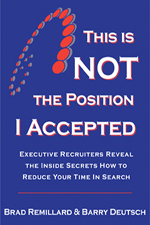
Over the last 15-20 years, we’ve been continually working on and refining a simple structured approach to conducting an effective job search. We call that process the Career Success Methodology. As many of you know, Brad and I have published a book on the Career Success Methodology called “This is NOT the Position I Accepted”.

Here are the simple 5 core best practices of an effective job search and the terminology we use in our Career Success Methodology to describe each one. There are a number of job search systems “out there”.  We happen to be slightly biased and think ours is the most comprehensive. However, at a basic level – there are a few best practices that regardless of the system, terminology, or trademarked name – all have the same basic elements.

1. Introspection – this is the stage of honing what you are looking for, what you bring to the table, what will bring you joy – the ideas behind one the most popular job search books ever – What Color is Your Parachute? Before you can start putting a resume together, thinking about where to send your resume, and prior to interviewing, you must go through this deeply reflective process.

We call this best practice in job search: Create a Personal Success Profile


2. Uncovering Job Leads and Referrals – this is the blending of traditional networking with social media to cast a large net and generate an abundance of opportunities from the hidden job market – the 80% or more of job openings that are never advertised. The vast majority of candidates rely on job postings in their job search – which at best yield 15-20% of the available opportunities.

We call this best practice in job search: Develop a Targeted Plan


3. Resume and Cover Letter – This is one of the most important documents you’ll ever create – yet most candidates give this the least amount of time in their job search. Very few understand how to create an exciting marketing-oriented document that captures the attention of HR, Hiring Managers, and recruiters. The vast majority of resumes and cover letters yield a response rate of less than 1%. You cannot conduct an effective job search if your response rate is less than 1%.

We call this best practice in job search: Compelling Marketing Brochure


4. Interviewing – Very few candidates recognize that the secret to acing the interview has nothing to do with what goes on during the interview. It’s all in the preparation. The small amount of time and effort most candidates spend in preparing for interviews is a complete waste of time and is essentially worthless. Interview preparation is like preparing for a battle – was it not Napoleon Bonaparte who claimed that battles were won in the planning tents of the generals – not on the battlefields?

We call this best practice in job search: Prepare for Interviewing


5. Closing the Deal – Just because you had an interview does not mean you’re going to get an offer – and even if you get an offer it might not be appropriate for your ability and market potential. This best practice is about showing your value, keeping the process moving forward, convincing the company to extend an offer, and negotiating a great package. Many “deals” that should have come together as perfect fits for company/candidate fall apart at this stage due to poor management of the “deal closing” process.

We call this best practice in job search: Win the Opportunity


FIVE Simple Best Practices that result in reducing the time it takes to conduct a job search by at least 50%.

How are you doing against these five simple best practices of conducting an effective job search?

Barry Deutsch

Don’t forget to join our LinkedIn Job Search Discussion Group to benchmark yourself against other job seekers in their execution and application of the 5 core best practices in conducting an effective job search.

Does Your Resume STINK? Is that the problem?

Holding your nose because your resume stinks

Did you know that the number one reason most candidates don’t get called for an interview after submitting a resume is that their resume and cover letter STINKS?

Reminder – LAST CHANCE to take Advantage of our Special One-Time Resume and Cover Letter Webinar tomorrow — Friday – January 29th – Special Appreciation Rate and Bonus Materials


If you’re not getting a high number of “bites” on your resume when you forward it to networking contacts and submit it to employers for their job postings, perhaps the problem is not so much with the economy – but rather in the document you’ve created to market yourself.

Can you afford to have a resume and cover letter that STINKS?

No wonder the average time for a manager or executive to find a job is creeping beyond 6 months into the 12-18 month plus time period.

How many months will you continue to deplete your savings account and base your job search on hope and luck by using a resume and cover that STINKS?

We’ve put together a very special webinar for the members of our job search community. One hour is all it takes to learn how to create a powerful marketing document that grabs employer’s attention and makes them want to pick up the phone and call you.

The best news is that we’ve cut the price in half for our loyal readers and followers and we’ve thrown in a few HOT items that will help your job search. You’ll NOT find a less expensive webinar packed with as many ideas – tactics – and helpful advice anywhere on the Internet.

Learn the inside secrets of creating and leveraging a power marketing document to get interviews and finish your job search quickly.

Join us for this webinar (probably will only be offered ONCE this year) which is special appreciation webinar for our job search community of loyal readers and followers.

Click the link below to take advantage of this unique private offer to our job search community reducing the normal fee for the webinar from $89.95 to $39.95 and the inclusion of two of our HOT audio programs – a total value of over $150.00.
Last chance to sign up TODAY. Click this link to register now:


SIGN UP-GET MORE INTERVIEWS WITH YOUR RESUME

Join me on Friday January 29th at 9 AM to start conducting an effective job search NOW!

Barry Deutsch

Photo courtesy of megngarnett

HELP, Resumes Keep Coming In. What Should We Do?

I received 347 resumes just this week. On a weekly basis this is about average. Some weeks I get more, some weeks less, but over time 300 or so is not unusual.

Many of these resumes were received for a search directly via email, about 10% via snail mail, another 15% from referrals and another 15% completely unsolicited with candidates just introducing themselves.

Of these, maybe half to two-thirds had cover letters. Of those with cover letters, about 80% were worthless and I didn’t even take the time to read them. Why, because they all were almost exactly the same. As they say in the movies, “Only the names had been changed.” The other 20% I did take the time to at least scan them looking for points that might align with a current search or that at least piqued my interest.  These 20% were different in that they were not long paragraphs that simply regurgitated the resume,  but instead most were either bullet points or the two column type we recommend using and have a free sample available for all to download. (CLICK HERE to download). They were easy to scan to pick up the highlights and decide how to properly handle the resume.

Although I really don’t care one way or the other if a resume has a cover letter or not, but if a candidate is going to include one it should add value by intriguing the reader enough to look at the resume. If not, why include it?

I believe this is why most cover letters are ignored. They all look alike and do nothing to make the reader want to take a look at your resume, so the recruiter, HR, or hiring manager completely skips over them.

Of the 347 resumes, most were a complete waste of time to even review. Sorry, I know candidates don’t want to hear this, but sometimes the truth hurts.  Sending me a resume when I don’t have an active search is not going to help you. As a retained recruiter, I work the searches I have and that is my focus.  If your resume doesn’t match my clients needs then I rarely save it. Not because you aren’t a qualified person, not because you don’t have great experience, but because after 30 years of this I know the profile of candidates that I place.  If you don’t meet that profile, I don’t need your resume regardless of your experiences and abilities.

This is true of most recruiters.

I recently heard from a candidate complaining that he had sent out over 200 resumes and had heard back from only 5. Actually that isn’t bad. Mass mailing resumes is a waste of time and money. It is a complete crap shoot that anything will stick. I advise all candidates to never do this.

The best way to get your cover letter and resume noticed is to be very targeted and focused, especially with recruiters. We want to fill the position as badly as you want the position.  From my perspective, if your background is consistent with my client’s needs and you meet the basic criteria I outlined in the article, How Recruiters Read Resumes In 10 Seconds (CLICK HERE to read), you will get a call from me usually within an hour.

Those 10% that were referred to me I responded to. I always respond when a person is referred to me, even if I can’t help them. I appreciate referrals and want to respect the person that made the referral. In my opinion this is the best way to get a recruiter that you don’t know to engage you.

The unsolicited resumes were put into a file that when time permits I will review. If they meet the profile of the type of candidate that I have a high probability of placing in the future, I will add them to our database.

My partner Barry and I have written extensively on what we believe is the best way to get your resume noticed by recruiters, HR, and hiring managers.  These recommendations come from over 30 years of experience as recruiters, from asking hundreds in HR what they use as screening criteria, and from thousands of hiring managers, CEOs and key executives telling us how they review resumes. Barry and I try to pass this information along to all so it will be helpful and reduce your level of frustration by knowing what to expect when you send out a resume.

One more way we can help you is to speak directly with you utilizing our webinars.  Our time and knowledge is valuable so YES, we do charge a nominal fee for the webinar. To balance that, we also offer a lot more tools and resources for FREE than what we charge for.

We’ve DEEPLY DISCOUNTED THE WEBINAR FOR THOSE JOB SEEKERS WITHIN OUR JOB SEARCH COMMUNITY – loyal followers on Twitter, readers of our blog, and members of our LinkedIn Job Search Discussion Group.

In a lively one-hour presentation, I’ll show you the inside secrets (from a retained executive recruiter’s perspective) of how to get your resume reviewed every single time and boost your resume acceptance rate (the number of times you get called for an interview from submitting your resume) from a dismal level of less than 10% to well into the 50% PLUS RANGE. If you’re reading this blog, when you sign up for the Webinar use the coupon code of IMPROVEMYRESUME.

If the small, inconsequential, almost non-existent fee for the webinar is too much to bear to boost your resume acceptance rate and cut your job search time dramatically, please feel free to download our many FREE resources for job seekers, including our radio show broadcasts, cover letter sample, and other tools.

I welcome your thought and comments.

Brad Remillard


Major Controversy – Why Bother Sending a Cover Letter?

Do let box checking your resume prevent you from getting interviews

There is a raging debate in many LinkedIn Professional and Networking Groups, on our own LinkedIn Job Search Discussion Group, hundreds of emails we’ve been sent, numerous blog comments, and an overwhelming number of tweets – all related to our last blog posting – “Pet Peeve – Your Resume and Cover Letter.”

Obviously, a few people have strong opinions on this subject.

Let’s review the debate:

We recommend you customize both your resume and cover letter for the specific job you are applying for.

Arguments for doing a cover letter and/or custom resume:

  • Employers and recruiters consider it disrespectful if you do not include a cover letter or resume
  • Employers and recruiters are looking for a reason to exclude you from consideration if you do not match up with their criteria. The custom resume or letter specifically addresses the key points in the job posting.
  • Employers and recruiters are overwhelmed in this poor job market with hundreds, if not thousands, of job applications per opening. They want to see an “extra effort” by applicants rather than a cookie-cutter shotgun scattered approach to applying for jobs.
  • Vast majority of job responses fall into the “Hot Potato” Method of applying for an opening.
  • The bland generic information in most resumes DO NOT give a recruiter or hiring manager enough information to decide whether or NOT to extend an interview invitation.

Arguments for NOT doing a cover letter and/or custom resume:

  • Low response rate from recruiters and employers – what’s the use. Even if I did one, the investment of time wouldn’t justify an improved outcome.
  • It takes too much time, is way too hard, and requires far too much effort.
  • Recruiters and Employers don’t read resumes or cover letters deeply enough, so why even bother?
  • It’s all a numbers game – the goal is to broadcast as many resumes to jobs I’m remotely qualified for, and maybe something will stick. I’m overwhelmed applying to jobs – no time to customize my response to each job posting.
  • Recruiters and Employers don’t provide enough information in their job postings to customize the cover letter and resume. They don’t list the important elements of the job or they have a laundry list of criteria that superman/superwoman couldn’t meet.
  • Recruiters and Employers are doing nothing more than box-checking resumes – a custom cover letter and resume will not help in this process of asking for everything under the sun and eliminating candidates if they don’t have one little inconsequential element checked-off.
  • Recruiters and Employers are using low level unskilled and untrained clerical staff to review resumes. Not possible for this level of person to accurately judge the resume of a managerial or executive candidate. Custom cover letters and resumes will NOT help (see bullet point about box-checking above).

Have I missed any of the arguments from each side? These would comprise over 90% of the responses to our last blog posting.

So, what to do from this point forward?

In my ever so humble opinion, I am going to stick by the perspective that for management and executive positions, a detailed cover letter should be written specifically addressing the top 3 points identified in the job posting and a custom resume should be submitted. If you don’t have the time to customize your resume, then at least have 3-4 versions of it and submit the one that matches up most closely with comparable accomplishments for the level of the job, the industry segment, or the common core success factor of that position.

We’re open to hearing from you as to your experience in this job market if you’ve really tried the custom approach. If you’ve not tried it yet, please don’t knock it. Test it and play with it. This strategy is but one of the many we recommend in our Career Success Methodology®. We’ve discovered that most job seekers at a managerial and executive level DO NOT conduct an effective job search. Implementing a few best practices in a structured framework can make an enormous difference in reducing the time it takes to find a great opportunity.

As a special offer to our job search community which includes:

Managerial and executive candidates who read our blog

Following us on Twitter

Participating in our LinkedIn Job Search Discussion Group

Following us through our discussions in a variety of LinkedIn Groups

You’ve downloaded our FREE Job Search tools and content

You’ve attended one of our webinars

You’ve bought one of our job search products

You’ve engaged us in one of our Job Search Coaching Services


We are offering a deep appreciation discount on our upcoming Webinar about resumes and cover letters this Friday January 29th, titled:

GET JOB INTERVIEWS WITH

POWERFUL RESUMES AND COVER LETTERS

This offer of over 50% off the public quoted fee is a special one-time appreciation offer for our job search community and is available only to a selected group – such as our loyal blog readers.


Click here to join the webinar


Please don’t be mad at us for making this offer.

We also have to make a living. It’s very hard to be successful by constantly giving away free tools, templates, audio programs, examples, illustrations, responding to requests for help, and responding to hundreds of comments on our blog and within LinkedIn. We are both trying to build a successful business around effective job search and hiring top talent.

Sometimes, we’re going to make special offers to our job search community for products, services, subscriptions, and webinars. Don’t hold it against us.

If the content was crap – then you can complain. However, Brad and I believe we provide some of the very best content on the Internet for job search and hiring. As many of you know, we give away an extraordinary amount of information in solid tactical tools to improve your job search – maybe to a fault.

We believe the best way to build a loyal following is to give away a lot of our content and as a consequence many job seekers or hiring managers who have found the information useful will move to investing a few dollars in our professional products or services.

Brad and I would like to extend a big thank you of appreciation to all our loyal fans and readers.

Barry Deutsch

PS – The coupon discount you’ll find on the webinar page is only good for the first 50 who register. After that, the price reverts back to our standard pricing for this webinar. Oops – I forgot to mention – the special offer webinar for you includes a number of EXTRA items that doubles the value of the webinar. You couldn’t find this much content about cover letters and resumes in one place if you searched for days.

Pet Peeve – Your Resume and Cover Letter

Screaming at Job Seekers for the mistakes they make in responding to job postings


I’m very frustrated today. I’m ready to explode at the candidates responding to my job postings.

On the outside I’d like to call candidates on the phone and invite them in for an interview – one the inside I’d like to call candidates and scream at them for their stupidity in the way they responded to my job postings.

Here’s a real-life current case study in how NOT to apply for a job. It’s one of my greatest pet peeves as a Retained Executive Recruiter:

Throwing out a resume without a custom cover letter and customizing the resume to fit the job spec described in the job posting.


There – that’s simply it – Finally, I got it off my chest!


I just put 3 new job postings up on LinkedIn. I posted the job on LinkedIn’s Paid Job Board Service and in the FREE Job Boards within various discussion groups (the results were no different for either approach). The jobs I posted were HR Manager, Construction Project Executive, and Senior Sales Executive.

I have received just through LinkedIn (referrals, recommendations, ad responses) over 1000 resumes so far. Approximately 90% did not have a cover letter. Less than 10 customized their resume for the specific job posting. Every one of these jobs is $100K and above. You’d think folks with that expensive parchment called a college diploma would know better.

Some of you may be familiar with a few of my earlier blog postings on this syndrome which I titled “The Hot Potato Method of Responding to a Job Posting”.

I don’t get it.

I’m confused.

I’m almost stunned past the point of words.

More than 75% of the candidates who replied to these jobs have been out of work for over 6 months. Over 50% have been out of work for over 9 months. Why would you RUIN your chances of being interviewed by tossing out your resume as if you don’t give a darn what I do with it?

The responses went something like:

“Here’s my resume”

“Please review my resume”

Some just emailed the resume as an attachment WITHOUT a single comment – as if the resume “spoke for itself”. It’s sad to the point of making me want to cry – or laugh hysterically.

I’d be very interested to hear from your perspective as a candidate why you don’t care enough to write a cover letter describing how your background and accomplishments fit the job spec posted? I’d be interested to hear why you would submit a resume that doesn’t specifically and precisely address the expectations listed in the job posting?

As a recruiter (and I’m sure I’m speaking on behalf of the vast majority of recruiters, HR professionals, and hiring managers), why should I bother to open your resume or consider you as a viable candidate, when it’s obvious you could care less whether you are granted an interview.

SHOW A LITTLE EFFORT IN YOUR JOB SEARCH.

MAKE ME THINK YOU ARE INTERESTED IN THIS SPECIFIC JOB.

LET ME KNOW YOU’RE NOT BROADCASTING COOKIE CUTTER RESUMES AND RESPONSES OUT TO EVERY JOB POSTING YOU SEE.

What motivates candidates to respond to job postings with the “Hot Potato Method”? Are they burnt out on their job search? Have they reached a point of apathy and indifference in their job search?

Do they (YOU) care if you get a job next month or in 18 months?

If you would like to STOP THIS JOB RESPONSE Posting NONSENSE right now, I’d like to recommend you join me for our upcoming webinar on


Get Interviews with

Effective Resumes and Cover Letters


We’ve DEEPLY DISCOUNTED THE WEBINAR FOR THOSE JOB SEEKERS WITHIN OUR JOB SEARCH COMMUNITY – loyal followers on Twitter, readers of our blog, members of our LinkedIn Job Search Discussion Group.

In a lively one-hour presentation, I’ll show you the inside secrets (from a Retained Executive Recruiter perspective) of how to get your resume reviewed every single time and boost your resume acceptance rate (number of times you get called for an interview from submitting your resume) from a dismal level of less than 10% well into the 50% PLUS RANGE.80-90%. If you’re reading this blog, when you sign up for the Webinar use the coupon code of IMPROVEMYRESUME.

If the small, inconsequential, almost non-existent fee for the webinar is too much to bear to boost your resume acceptance rate and cut your job search time dramatically, please feel free to download our many FREE resources for job seekers, including our radio show broadcasts, cover letter sample, and other tools.

Don’t forget about our LinkedIn Job Search Discussion Group, one of the most vibrant and rapidly growing groups on LinkedIn. You can learn about best practices in writing resumes and cover letters.

I’m stunned that most candidates will not take advantage of great content, webinars, workshops, tools, audio programs, Youtube videos, blog posting advice, and other tools that range in price from small investments to FREE.

Don’t be the one to conduct a job search that takes 6-9-18 months when you could have done it in half the time by improving your resume and cover letter to raise your resume acceptance rate.

Thanks for letting my rank about one of my greatest pet peeves in job search.

I look forward to seeing you at the webinar on January 29th and transforming your ability to write effective resumes and cover letters to immediately boost your resume acceptance rate.

Barry Deutsch