Posts tagged: Cover Letter Tips

It’s play-off time for your job search – what do you have to lose?

Are you conducting a job search like it's the last 5 minutes of your championship play-off game?

Here comes another basketball metaphor about your job search.

A few nights ago, my Varsity HS Girls Basketball Team played in the first round of the State Playoffs. In our section we were ranked 6th out of 32 teams. We played a team ranked 24 and almost lost.

Why? It should have been an easy win – a no-brainer.

At playoff time, teams change – they go from being conservative, playing careful, doing the same old thing, and usually playing within their capability. At playoff time, lower ranked teams hike it up to whole other level. They play with complete abandon – and give it a 110%.

What do the lower ranked teams have to lose? If they don’t win, their season ends right now. And if they can pull off one more win – they get to come back and play another game. Many upsets occur, because lower ranked teams fight as hard as they ever fought, they do everything they can to influence the outcome, and they leave nothing on the table.

If you asked the team last night that lost to us in the last 5 minutes of the game if they had any regrets – if any of the players felt they had not played as hard as they could – and the answer would be an overwhelming “I gave it everything I could”.

When asked that question, our higher ranked girls would have said there was a lot they could have done and they were disappointed in their performance since they didn’t “work hard enough”. They were coasting on their high ranking, thinking their past track record could speak for itself.

Are you guilty of this dysfunctional thinking in your job search?

If you ask most candidates that question about their job search, I would predict that most candidates would have significant regrets about their commitment, energy, and intensity regarding their job search.

Most candidates are not willing to “go beyond the call of duty” in their job search.

Most candidates could not claim that they have “outworked their peers” in their job search.

Most candidates are just doing the same thing over and over (Benjamin Franklin’s Definition of Insanity).

No wonder the typical executive/senior management job search is now significantly over 6 months. Here are some questions to ponder about your job search:

  • What are you doing in your job search that your peers are unwilling to do?
  • What are doing this week that represents a high level of energy, commitment, and intensity in your job search than last week?
  • How would you quantify the effort and intensity of your job search?
  • Shouldn’t you be treating your job search like it’s play-off time and it’s the last 5 minutes of what could be the last game of the season or your entire career?
  • Are you going beyond the call of duty in your job search?

What could you be doing differently that would represent a higher level of commitment, energy, and intensity?

This is just a small list of the hundreds of things you could be doing in your job search to reduce the time it takes to find a great opportunity. Most of your peers are unwilling to invest the time to do these job search best practices. Are you willing be to do what it takes to win – to go beyond what most of your peers do in their job search – or would you rather coast in the middle of the pack?

Have you downloaded our FREE Job Search Preparation Scorecard to see if you’re doing everything you can to conduct an effective job search?

What’s holding you back from pouring everything you’ve got into your job search?

Barry Deutsch

Jump into the Questions and Answers in our popular LinkedIn Discussion Group to discover what some candidates are doing that truly represents an effort to go “beyond the call of duty”.

5 Tips How To Keep Your Resume Out Of The Black Hole

Candidates constantly complain about how when they email resumes they all seem to end up in the proverbial “black hole.”

As a recruiter, who receives on average 6 to 7 hundred resumes a week, I can understand your frustration. I’m also sure I may not be able to eliminate it, however, I hope I can help you reduce it with these few tips.

1) When you move from candidate to hiring manager remember your frustrations and treat the people sending you resumes as you want to be treated now. You know, the thing our parents always taught us about treating others the  way we want to be treated. Sounds so obvious but I just wrote another article about how rarely this happens.

2) The best way to avoid the black hole in the first place is not enter it. If you include a cover letter; a) don’t send it as a separate attachment to your resume. It should be the first page when the resume attachment is opened. b) use either Word or PDF to send your resume. I receive many resumes I can’t open. c) your cover letter should be designed to grab the reader’s attention. That means the cover letter must clearly and with a simple glance align your background with the needs of the job. CLICK HERE and download a free copy of a sample cover letter that does just that.

3) You don’t have to be the first resume received. Most ads run for at least 30 days. Many candidates have experienced most companies take their time. So wait a few days or even up to a week or more before replying. Avoid being one of the first 400 resumes. After the first blast of resumes come, as more trickle in one or two at a time, I will often just open the resume take a look at it and make a decision how to handle it. These people avoided the rush and got their resume reviewed.

4) First try the personal approach. With number 3 above in mind, use this time to try and find a personal connection within the company or recruiting firm. There are many ways to do this. 1) Linkedin should be first on your list. This is  exactly why you need to build your connections to the maximum number possible. 2) Google the person’s name, position, or company name, anything that will help you target the right person within the company. Then look for a personal introduction. Most recruiters value a referral.

5) Don’t use services that blast your resume to 10,000 recruiters and/or companies. This is a major waste of money. What do you expect will happen when someone receives a bunch of unsolicited resumes? What would you do with them? How do you handle unsolicited emails? Most call it SPAM. It doesn’t work.

Hope these tips are helpful and now your resume will at least pop to the top.

Designing a resume is the starting point of every job search. If your resume gets screened out it is worthless.

If you didn’t know these little tips our Complete Resume System is designed to make sure your resume gets noticed. We guarantee it. The hundreds of people who have used this system to build an effective resume are getting their resumes read. You can too. There are many more tips you should include in your resume. For more information about getting your resume noticed check out our Complete Resume System. CLICK HERE to view it.

You should join our LinkedIn IMPACT Hiring Solutions Job Search Networking Group. It is free on LinkedIn and there is an enormous amount of articles and discussions to help in your job search. That is why over 4000 people have joined so far. CLICK HERE to join if you are a LinkedIn member.

You can also download for FREE a sample cover letter to use that will align your background with those of the company. CLICK HERE to download your sample.

I welcome your thoughts and feedback.

Brad Remillard

What are Job Search Best Practices?

Success By Using Job Search Best Practices

Do you know the core best practices of conducting a job search?

Could you rattle these off the tip of your tongue right now?

Here’s the killer question – are you executing flawlessly against these best practices in your current job search?

If either you don’t know the core best practices and/or you are not executing flawlessly against them, your job search could be taking 2X-3X longer than necessary.

In our work with over 200,000 candidates over the last 25 years, we’ve discovered that most candidates are not up-to-speed on the latest job search best practices, nor is there an effective leverage and execution of the best practices – what’s the result of this lack of best practice knowledge:

  • Mental anguish
  • Burning through your savings account
  • Wasting precious time on the wrong activities
  • Taking too long to find a job
  • Humiliation, rejection, and despair

But wait – there is hope. You can create an effective job search around the most common best practices.

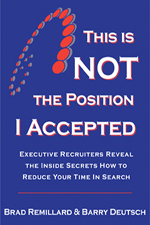
Over the last 15-20 years, we’ve been continually working on and refining a simple structured approach to conducting an effective job search. We call that process the Career Success Methodology. As many of you know, Brad and I have published a book on the Career Success Methodology called “This is NOT the Position I Accepted”.

Here are the simple 5 core best practices of an effective job search and the terminology we use in our Career Success Methodology to describe each one. There are a number of job search systems “out there”.  We happen to be slightly biased and think ours is the most comprehensive. However, at a basic level – there are a few best practices that regardless of the system, terminology, or trademarked name – all have the same basic elements.

1. Introspection – this is the stage of honing what you are looking for, what you bring to the table, what will bring you joy – the ideas behind one the most popular job search books ever – What Color is Your Parachute? Before you can start putting a resume together, thinking about where to send your resume, and prior to interviewing, you must go through this deeply reflective process.

We call this best practice in job search: Create a Personal Success Profile


2. Uncovering Job Leads and Referrals – this is the blending of traditional networking with social media to cast a large net and generate an abundance of opportunities from the hidden job market – the 80% or more of job openings that are never advertised. The vast majority of candidates rely on job postings in their job search – which at best yield 15-20% of the available opportunities.

We call this best practice in job search: Develop a Targeted Plan


3. Resume and Cover Letter – This is one of the most important documents you’ll ever create – yet most candidates give this the least amount of time in their job search. Very few understand how to create an exciting marketing-oriented document that captures the attention of HR, Hiring Managers, and recruiters. The vast majority of resumes and cover letters yield a response rate of less than 1%. You cannot conduct an effective job search if your response rate is less than 1%.

We call this best practice in job search: Compelling Marketing Brochure


4. Interviewing – Very few candidates recognize that the secret to acing the interview has nothing to do with what goes on during the interview. It’s all in the preparation. The small amount of time and effort most candidates spend in preparing for interviews is a complete waste of time and is essentially worthless. Interview preparation is like preparing for a battle – was it not Napoleon Bonaparte who claimed that battles were won in the planning tents of the generals – not on the battlefields?

We call this best practice in job search: Prepare for Interviewing


5. Closing the Deal – Just because you had an interview does not mean you’re going to get an offer – and even if you get an offer it might not be appropriate for your ability and market potential. This best practice is about showing your value, keeping the process moving forward, convincing the company to extend an offer, and negotiating a great package. Many “deals” that should have come together as perfect fits for company/candidate fall apart at this stage due to poor management of the “deal closing” process.

We call this best practice in job search: Win the Opportunity


FIVE Simple Best Practices that result in reducing the time it takes to conduct a job search by at least 50%.

How are you doing against these five simple best practices of conducting an effective job search?

Barry Deutsch

Don’t forget to join our LinkedIn Job Search Discussion Group to benchmark yourself against other job seekers in their execution and application of the 5 core best practices in conducting an effective job search.

Does Your Resume STINK? Is that the problem?

Holding your nose because your resume stinks

Did you know that the number one reason most candidates don’t get called for an interview after submitting a resume is that their resume and cover letter STINKS?

Reminder – LAST CHANCE to take Advantage of our Special One-Time Resume and Cover Letter Webinar tomorrow — Friday – January 29th – Special Appreciation Rate and Bonus Materials


If you’re not getting a high number of “bites” on your resume when you forward it to networking contacts and submit it to employers for their job postings, perhaps the problem is not so much with the economy – but rather in the document you’ve created to market yourself.

Can you afford to have a resume and cover letter that STINKS?

No wonder the average time for a manager or executive to find a job is creeping beyond 6 months into the 12-18 month plus time period.

How many months will you continue to deplete your savings account and base your job search on hope and luck by using a resume and cover that STINKS?

We’ve put together a very special webinar for the members of our job search community. One hour is all it takes to learn how to create a powerful marketing document that grabs employer’s attention and makes them want to pick up the phone and call you.

The best news is that we’ve cut the price in half for our loyal readers and followers and we’ve thrown in a few HOT items that will help your job search. You’ll NOT find a less expensive webinar packed with as many ideas – tactics – and helpful advice anywhere on the Internet.

Learn the inside secrets of creating and leveraging a power marketing document to get interviews and finish your job search quickly.

Join us for this webinar (probably will only be offered ONCE this year) which is special appreciation webinar for our job search community of loyal readers and followers.

Click the link below to take advantage of this unique private offer to our job search community reducing the normal fee for the webinar from $89.95 to $39.95 and the inclusion of two of our HOT audio programs – a total value of over $150.00.
Last chance to sign up TODAY. Click this link to register now:


SIGN UP-GET MORE INTERVIEWS WITH YOUR RESUME

Join me on Friday January 29th at 9 AM to start conducting an effective job search NOW!

Barry Deutsch

Photo courtesy of megngarnett

HELP, Resumes Keep Coming In. What Should We Do?

I received 347 resumes just this week. On a weekly basis this is about average. Some weeks I get more, some weeks less, but over time 300 or so is not unusual.

Many of these resumes were received for a search directly via email, about 10% via snail mail, another 15% from referrals and another 15% completely unsolicited with candidates just introducing themselves.

Of these, maybe half to two-thirds had cover letters. Of those with cover letters, about 80% were worthless and I didn’t even take the time to read them. Why, because they all were almost exactly the same. As they say in the movies, “Only the names had been changed.” The other 20% I did take the time to at least scan them looking for points that might align with a current search or that at least piqued my interest.  These 20% were different in that they were not long paragraphs that simply regurgitated the resume,  but instead most were either bullet points or the two column type we recommend using and have a free sample available for all to download. (CLICK HERE to download). They were easy to scan to pick up the highlights and decide how to properly handle the resume.

Although I really don’t care one way or the other if a resume has a cover letter or not, but if a candidate is going to include one it should add value by intriguing the reader enough to look at the resume. If not, why include it?

I believe this is why most cover letters are ignored. They all look alike and do nothing to make the reader want to take a look at your resume, so the recruiter, HR, or hiring manager completely skips over them.

Of the 347 resumes, most were a complete waste of time to even review. Sorry, I know candidates don’t want to hear this, but sometimes the truth hurts.  Sending me a resume when I don’t have an active search is not going to help you. As a retained recruiter, I work the searches I have and that is my focus.  If your resume doesn’t match my clients needs then I rarely save it. Not because you aren’t a qualified person, not because you don’t have great experience, but because after 30 years of this I know the profile of candidates that I place.  If you don’t meet that profile, I don’t need your resume regardless of your experiences and abilities.

This is true of most recruiters.

I recently heard from a candidate complaining that he had sent out over 200 resumes and had heard back from only 5. Actually that isn’t bad. Mass mailing resumes is a waste of time and money. It is a complete crap shoot that anything will stick. I advise all candidates to never do this.

The best way to get your cover letter and resume noticed is to be very targeted and focused, especially with recruiters. We want to fill the position as badly as you want the position.  From my perspective, if your background is consistent with my client’s needs and you meet the basic criteria I outlined in the article, How Recruiters Read Resumes In 10 Seconds (CLICK HERE to read), you will get a call from me usually within an hour.

Those 10% that were referred to me I responded to. I always respond when a person is referred to me, even if I can’t help them. I appreciate referrals and want to respect the person that made the referral. In my opinion this is the best way to get a recruiter that you don’t know to engage you.

The unsolicited resumes were put into a file that when time permits I will review. If they meet the profile of the type of candidate that I have a high probability of placing in the future, I will add them to our database.

My partner Barry and I have written extensively on what we believe is the best way to get your resume noticed by recruiters, HR, and hiring managers.  These recommendations come from over 30 years of experience as recruiters, from asking hundreds in HR what they use as screening criteria, and from thousands of hiring managers, CEOs and key executives telling us how they review resumes. Barry and I try to pass this information along to all so it will be helpful and reduce your level of frustration by knowing what to expect when you send out a resume.

One more way we can help you is to speak directly with you utilizing our webinars.  Our time and knowledge is valuable so YES, we do charge a nominal fee for the webinar. To balance that, we also offer a lot more tools and resources for FREE than what we charge for.

We’ve DEEPLY DISCOUNTED THE WEBINAR FOR THOSE JOB SEEKERS WITHIN OUR JOB SEARCH COMMUNITY – loyal followers on Twitter, readers of our blog, and members of our LinkedIn Job Search Discussion Group.

In a lively one-hour presentation, I’ll show you the inside secrets (from a retained executive recruiter’s perspective) of how to get your resume reviewed every single time and boost your resume acceptance rate (the number of times you get called for an interview from submitting your resume) from a dismal level of less than 10% to well into the 50% PLUS RANGE. If you’re reading this blog, when you sign up for the Webinar use the coupon code of IMPROVEMYRESUME.

If the small, inconsequential, almost non-existent fee for the webinar is too much to bear to boost your resume acceptance rate and cut your job search time dramatically, please feel free to download our many FREE resources for job seekers, including our radio show broadcasts, cover letter sample, and other tools.

I welcome your thought and comments.

Brad Remillard


Major Controversy – Why Bother Sending a Cover Letter?

Do let box checking your resume prevent you from getting interviews

There is a raging debate in many LinkedIn Professional and Networking Groups, on our own LinkedIn Job Search Discussion Group, hundreds of emails we’ve been sent, numerous blog comments, and an overwhelming number of tweets – all related to our last blog posting – “Pet Peeve – Your Resume and Cover Letter.”

Obviously, a few people have strong opinions on this subject.

Let’s review the debate:

We recommend you customize both your resume and cover letter for the specific job you are applying for.

Arguments for doing a cover letter and/or custom resume:

  • Employers and recruiters consider it disrespectful if you do not include a cover letter or resume
  • Employers and recruiters are looking for a reason to exclude you from consideration if you do not match up with their criteria. The custom resume or letter specifically addresses the key points in the job posting.
  • Employers and recruiters are overwhelmed in this poor job market with hundreds, if not thousands, of job applications per opening. They want to see an “extra effort” by applicants rather than a cookie-cutter shotgun scattered approach to applying for jobs.
  • Vast majority of job responses fall into the “Hot Potato” Method of applying for an opening.
  • The bland generic information in most resumes DO NOT give a recruiter or hiring manager enough information to decide whether or NOT to extend an interview invitation.

Arguments for NOT doing a cover letter and/or custom resume:

  • Low response rate from recruiters and employers – what’s the use. Even if I did one, the investment of time wouldn’t justify an improved outcome.
  • It takes too much time, is way too hard, and requires far too much effort.
  • Recruiters and Employers don’t read resumes or cover letters deeply enough, so why even bother?
  • It’s all a numbers game – the goal is to broadcast as many resumes to jobs I’m remotely qualified for, and maybe something will stick. I’m overwhelmed applying to jobs – no time to customize my response to each job posting.
  • Recruiters and Employers don’t provide enough information in their job postings to customize the cover letter and resume. They don’t list the important elements of the job or they have a laundry list of criteria that superman/superwoman couldn’t meet.
  • Recruiters and Employers are doing nothing more than box-checking resumes – a custom cover letter and resume will not help in this process of asking for everything under the sun and eliminating candidates if they don’t have one little inconsequential element checked-off.
  • Recruiters and Employers are using low level unskilled and untrained clerical staff to review resumes. Not possible for this level of person to accurately judge the resume of a managerial or executive candidate. Custom cover letters and resumes will NOT help (see bullet point about box-checking above).

Have I missed any of the arguments from each side? These would comprise over 90% of the responses to our last blog posting.

So, what to do from this point forward?

In my ever so humble opinion, I am going to stick by the perspective that for management and executive positions, a detailed cover letter should be written specifically addressing the top 3 points identified in the job posting and a custom resume should be submitted. If you don’t have the time to customize your resume, then at least have 3-4 versions of it and submit the one that matches up most closely with comparable accomplishments for the level of the job, the industry segment, or the common core success factor of that position.

We’re open to hearing from you as to your experience in this job market if you’ve really tried the custom approach. If you’ve not tried it yet, please don’t knock it. Test it and play with it. This strategy is but one of the many we recommend in our Career Success Methodology®. We’ve discovered that most job seekers at a managerial and executive level DO NOT conduct an effective job search. Implementing a few best practices in a structured framework can make an enormous difference in reducing the time it takes to find a great opportunity.

As a special offer to our job search community which includes:

Managerial and executive candidates who read our blog

Following us on Twitter

Participating in our LinkedIn Job Search Discussion Group

Following us through our discussions in a variety of LinkedIn Groups

You’ve downloaded our FREE Job Search tools and content

You’ve attended one of our webinars

You’ve bought one of our job search products

You’ve engaged us in one of our Job Search Coaching Services


We are offering a deep appreciation discount on our upcoming Webinar about resumes and cover letters this Friday January 29th, titled:

GET JOB INTERVIEWS WITH

POWERFUL RESUMES AND COVER LETTERS

This offer of over 50% off the public quoted fee is a special one-time appreciation offer for our job search community and is available only to a selected group – such as our loyal blog readers.


Click here to join the webinar


Please don’t be mad at us for making this offer.

We also have to make a living. It’s very hard to be successful by constantly giving away free tools, templates, audio programs, examples, illustrations, responding to requests for help, and responding to hundreds of comments on our blog and within LinkedIn. We are both trying to build a successful business around effective job search and hiring top talent.

Sometimes, we’re going to make special offers to our job search community for products, services, subscriptions, and webinars. Don’t hold it against us.

If the content was crap – then you can complain. However, Brad and I believe we provide some of the very best content on the Internet for job search and hiring. As many of you know, we give away an extraordinary amount of information in solid tactical tools to improve your job search – maybe to a fault.

We believe the best way to build a loyal following is to give away a lot of our content and as a consequence many job seekers or hiring managers who have found the information useful will move to investing a few dollars in our professional products or services.

Brad and I would like to extend a big thank you of appreciation to all our loyal fans and readers.

Barry Deutsch

PS – The coupon discount you’ll find on the webinar page is only good for the first 50 who register. After that, the price reverts back to our standard pricing for this webinar. Oops – I forgot to mention – the special offer webinar for you includes a number of EXTRA items that doubles the value of the webinar. You couldn’t find this much content about cover letters and resumes in one place if you searched for days.

Pet Peeve – Your Resume and Cover Letter

Screaming at Job Seekers for the mistakes they make in responding to job postings


I’m very frustrated today. I’m ready to explode at the candidates responding to my job postings.

On the outside I’d like to call candidates on the phone and invite them in for an interview – one the inside I’d like to call candidates and scream at them for their stupidity in the way they responded to my job postings.

Here’s a real-life current case study in how NOT to apply for a job. It’s one of my greatest pet peeves as a Retained Executive Recruiter:

Throwing out a resume without a custom cover letter and customizing the resume to fit the job spec described in the job posting.


There – that’s simply it – Finally, I got it off my chest!


I just put 3 new job postings up on LinkedIn. I posted the job on LinkedIn’s Paid Job Board Service and in the FREE Job Boards within various discussion groups (the results were no different for either approach). The jobs I posted were HR Manager, Construction Project Executive, and Senior Sales Executive.

I have received just through LinkedIn (referrals, recommendations, ad responses) over 1000 resumes so far. Approximately 90% did not have a cover letter. Less than 10 customized their resume for the specific job posting. Every one of these jobs is $100K and above. You’d think folks with that expensive parchment called a college diploma would know better.

Some of you may be familiar with a few of my earlier blog postings on this syndrome which I titled “The Hot Potato Method of Responding to a Job Posting”.

I don’t get it.

I’m confused.

I’m almost stunned past the point of words.

More than 75% of the candidates who replied to these jobs have been out of work for over 6 months. Over 50% have been out of work for over 9 months. Why would you RUIN your chances of being interviewed by tossing out your resume as if you don’t give a darn what I do with it?

The responses went something like:

“Here’s my resume”

“Please review my resume”

Some just emailed the resume as an attachment WITHOUT a single comment – as if the resume “spoke for itself”. It’s sad to the point of making me want to cry – or laugh hysterically.

I’d be very interested to hear from your perspective as a candidate why you don’t care enough to write a cover letter describing how your background and accomplishments fit the job spec posted? I’d be interested to hear why you would submit a resume that doesn’t specifically and precisely address the expectations listed in the job posting?

As a recruiter (and I’m sure I’m speaking on behalf of the vast majority of recruiters, HR professionals, and hiring managers), why should I bother to open your resume or consider you as a viable candidate, when it’s obvious you could care less whether you are granted an interview.

SHOW A LITTLE EFFORT IN YOUR JOB SEARCH.

MAKE ME THINK YOU ARE INTERESTED IN THIS SPECIFIC JOB.

LET ME KNOW YOU’RE NOT BROADCASTING COOKIE CUTTER RESUMES AND RESPONSES OUT TO EVERY JOB POSTING YOU SEE.

What motivates candidates to respond to job postings with the “Hot Potato Method”? Are they burnt out on their job search? Have they reached a point of apathy and indifference in their job search?

Do they (YOU) care if you get a job next month or in 18 months?

If you would like to STOP THIS JOB RESPONSE Posting NONSENSE right now, I’d like to recommend you join me for our upcoming webinar on


Get Interviews with

Effective Resumes and Cover Letters


We’ve DEEPLY DISCOUNTED THE WEBINAR FOR THOSE JOB SEEKERS WITHIN OUR JOB SEARCH COMMUNITY – loyal followers on Twitter, readers of our blog, members of our LinkedIn Job Search Discussion Group.

In a lively one-hour presentation, I’ll show you the inside secrets (from a Retained Executive Recruiter perspective) of how to get your resume reviewed every single time and boost your resume acceptance rate (number of times you get called for an interview from submitting your resume) from a dismal level of less than 10% well into the 50% PLUS RANGE.80-90%. If you’re reading this blog, when you sign up for the Webinar use the coupon code of IMPROVEMYRESUME.

If the small, inconsequential, almost non-existent fee for the webinar is too much to bear to boost your resume acceptance rate and cut your job search time dramatically, please feel free to download our many FREE resources for job seekers, including our radio show broadcasts, cover letter sample, and other tools.

Don’t forget about our LinkedIn Job Search Discussion Group, one of the most vibrant and rapidly growing groups on LinkedIn. You can learn about best practices in writing resumes and cover letters.

I’m stunned that most candidates will not take advantage of great content, webinars, workshops, tools, audio programs, Youtube videos, blog posting advice, and other tools that range in price from small investments to FREE.

Don’t be the one to conduct a job search that takes 6-9-18 months when you could have done it in half the time by improving your resume and cover letter to raise your resume acceptance rate.

Thanks for letting my rank about one of my greatest pet peeves in job search.

I look forward to seeing you at the webinar on January 29th and transforming your ability to write effective resumes and cover letters to immediately boost your resume acceptance rate.

Barry Deutsch

11 New Year Resolutions For Your Job Search

It is time to look forward to 2010. Regardless of 2009 happenings and all its trials and tribulations, 2010 is upon us and now is the time to think about how best to approach the year with regards to your career or job search.

Here are some ideas that you might want to consider:

1. If you are actively searching for a job, make a serious evaluation of your 2009 search. What worked, what didn’t, what successes did you have, what are the strong points to your search and what areas need to be improved in 2010? To help you do this, you can download for free our 8 Point Job Search Self-Assessment Scorecard. This will highlight some of these areas.

2. Dust off the old resume and update it. All professionals should maintain an updated resume. Even if you are not searching this is just prudent. It is useful to ensure when you do need one that it is ready, as it reduces the stress of trying to remember what happened in the past, and helps to identify whether or not you are growing or doing the same thing you did last and the year before that.

3. From the resume, step back and take a look at your career and either update or create your career plan. Remember the 6 Ps – Prior Proper Planning Prevents Poor Performance. This is true in business and in your career. You should be able to answer some basic questions:

A. What are your career goals for 2010? This doesn’t have to be advancement to the next level. It could be what additional experience, training or skills you would need to reach your goal.

B. If advancement is your goal, are you able to get the right experience in your current company? When you write your resume and find you have been doing the same things for the last 2 years you may need to reconsider. Did you add  to your marketability in 2009? This doesn’t mean in terms of dollars. In today’s market, getting a job without going backwards is a good thing. So are you more employable today than a year ago?

C. What experience, skills, or training, does your boss have that will help you be qualified for their position?

4. Write out a job description that meets your goals for 2010. Include the additional experience you need to move your career forward. For example, manage people, participate in system implementation, additional experience in running a trade show, experience in assisting with union negotiations, international sales experience, these are all examples of some experience to include in a job description.

5. Schedule a  1-2-1 with your boss. This should be a separate meeting from your annual review. Make it clear that this meeting is about you and  your career. Sit down and do some career planning with your supervisor. Discuss the issues in #3 above. Is your manager willing to help you get this experience? If so good, if not, then you have a decision to make. It is possible that your manager may be able to provide some additional experience you never thought about obtaining.

6. Identify at least two organizations you will actively participate in. If you already belong to a professional association then become an active member. Active means attending at least 80% of the meetings, serving on a committee, becoming a board member, etc. Do whatever it takes so that people in these groups get to know you and know you well. These associations are prime hunting grounds for recruiters looking for top talent.

7. Consider serving on a nonprofit board. This serves the community, makes you feel good, helps others, and it helps with getting more people to know you and your abilities. Great referral sources.

8. Consider working with a certified career coach. Highly skilled career coaches can really help. They help you clarify the issues above and assist you in making a plan that makes sense to you.

9. If you are in a job search get an accountability partner. We have two articles available to help you identify the characteristics of a good accountability partner and the duties, tasks and responsibilities of a good partner. (See these two articles).

10. Identify the resources you need in 2010 to advance your career. What books, classes, white papers, etc., do you need to make sure you stay on your career path? There are a wealth of resources and tools, many of which are free on the Internet, to help you with your career plan. (This is NOT The Position I Accepted was written specifically for this purpose).

11. Implement. Planning is great, but absolutely worthless without execution. Set up some 30, 60 and 90 day goals. Once they are achieved, then schedule out the next 30, 60 and 90 day goals. Trying to schedule a year out leads to, “I will do that next month as I still have plenty of time.” Before you know it, the year is over. Short term goals are easier to manage and achieve.

2010 is a great year to take control of your job search or career. There are so many resources to help you, that all you need to do is take control and do it.

For some free resources to help you consider:

  • Joining our LinkedIn Job Search Networking Group. There are numerous discussions and articles to get you started in 2010.
  • Download the Skills Assessment in the What’s New section at the bottom of our home page. It starts with identifying your skills and finding out which ones are transferable.
  • Download the sample cover letter from the What’s New section at the bottom of our home page. This is a great tool that will align your resume with the company’s needs.

If this has been helpful to you, then please consider helping others by passing it along to them. Consider forwarding the link to your network, tweeting it on Twitter, adding the link to your Facebook, or updating your LinkedIn status. Let’s all try to help others in 2010.

I welcome your thoughts, comments and questions.

Brad Remillard

Job Search 2010 Get Started On The Right Foot Part 2

In Part 1 I discussed the need for getting an accountability partner and what an accountability partner is. This article will be about what an accountability partner should do to help you.

A good accountability partner can make a major difference in one’s job search. I have seen people spend months looking, but once they engage an accountability partner their search takes off. You can call this coincidence if you want, I did for a while until I saw it happening over and over, and the people using the accountability partner were giving them the credit for their success.

So what should an accountability partner do? Here are some of my thoughts, and please add your thoughts and experiences in the comment section so others will benefit.

1) Accountability. Sounds obvious doesn’t it, but this is the main goal. A good accountability partner will hold your feet to the fire.  First and foremost, they will hold you accountable to do what you say you are going to do.

2) No Excuses. They will listen intently to your excuses and then hold you accountable to what you say. A good accountability partner knows the difference between excuses and real road blocks.

3) Empathy Not Sympathy. Accountability partners  understand the emotional  ups and downs. They understand  your feelings but don’t become emotionally involved or attached.  They can separate their feelings from yours, which allows them to stay objective.

4) Listen Well. They know when to let you blow off frustration and vent. They recognize this is part of the process. However, they don’t let that get you off your plan or off track. They will still bring you back and hold you accountable to what you say you need to do.

5) Help and Guidance. Most job searches get stalled at some point. An accountability partner has the experience and knowledge to help you redirect your search. They have the experience to recognize opportunities you, the candidate, may never have thought of or when you are just not doing something effectively.

6) Tough Love. A good accountability partner is not there to be your friend. Get a dog if that is what you want. They are there to give you tough love when needed. Sometimes even make you angry or embarrassed if you aren’t delivering what you said you promised to do. They call it as they see it. Would you really want anything less?

7) Willing to Meet Regularly. They will meet you at least weekly to discuss progress and lay out a plan for the following week and month. If your plan is weak, they will push you to improve it. They keep you on schedule and on track. They will take your calls and reply to your emails. Yes,  it is a lot of work and time.

These are some of the key functions of an accountability partner. It is not by any means a complete list. If you get these in an accountability partner  you will be off to a great start in 2010.

Please add other key functions that you think are important or have benefited from in the comment section. We welcome and encourage your thoughts, comments and input.

Join our Linkedin Job Search Networking Group. 3400 other people are benefiting from the discussions and articles. CLICK HERE to join, it is free.

Turbo charge your search in 2010 by evaluating its strengths and weaknesses with our FREE Job Search Plan Self-Assessment Scorecard. This will help you and your accountability partner get your search started out right. CLICK HERE to download your scorecard.

Need a great cover letter? A free sample cover letter that has proven to get you noticed is on our Web site for you to use with your resume. CLICK HERE to download yours.

If this was helpful, then please help others by forwarding it on to your network, posting on your Facebook page, Tweet with the link, post to your Linkedin groups or status update.  Let’s all do everything we can to help those looking for employment.

Brad Remillard


Cover Letter + Great Resume = Interview

This is the winning formula for getting interviews. There are exceptions for personal referrals and networking contacts, but often even with these they will first ask for a resume.

It has been my experience recently that many candidates “know” this formula intellectually but few convert from the knowing to “doing.” And that after all is the key.

I’m currently conducting a search and as one might expect the number of resumes received is almost overwhelming. I spend my weekends and nights just trying to empty my inbox.  Not an easy task. About 65% of the resumes I receive have cover letters. Most to some varying degree give me the standard, BLAH, BLAH, BLAH. Once in a while one will stand out so I take the time to read it. I particularly like the two column format as it quickly aligns their experiences with what I’m seeking for my client. (If you want to get an example, a free sample is available, just CLICK HERE).

These types of cover letters can get me very excited to actually read (not scan) your resume. The problem is too often the rug is pulled right out from under my high level of excitement.  Simply put the resume sucks. There are many reasons for this, but regardless, this person had me and other recruiters,  hiring managers and HR professionals right where they want them. They overcame one of the biggest issues with resumes, getting the resume read not just a 10 second scan. Only to disappoint the reader. What a tragedy.

In this example the formula was: great cover letter + average or below average resume = trashed resume.

Anyone who has been following Barry and I know we have written extensively that in this economy it is greatness that counts. Good only works in good times. Greatness works all the time, but is positively, absolutely, a  must in bad times.

A great cover letter with an average or below average resume, is like a bad book with a great dust cover. It is still a bad book.  How many times have you sat in a movie theater watching an upcoming movie trailer, then gone to the movie and it was really bad? Remember the excitement about waiting for the movie to come out, the excitement as you sat waiting for the movie to start, and then the disappointment when the movie was so bad you walked out.  A great movie trailer doesn’t make a bad movie better.

A great resume starts with understanding how a resume is scanned. Start with the basics:

  1. Your contact information including a phone number. Sounds pretty basic to me. For some reason many candidates are starting to have only an email address on the resume.
  2. Basic information about the companies you worked for (unless they are household names), such as sales, number of employees, and what the company does or the industry.
  3. Basic information regarding the scope of your positions. Number of people supervised, basic duties and responsibilities, if multi-location, international, functional area managed, etc.
  4. Education. When appropriate additional certifications or courses that enhance your marketability.
  5. Company ownership. Is it a public company, owner operated, private equity owned or something else?
  6. Some bullet points that directly align as closely as possible to the two column cover letter you included.
  7. Bullet points that include results in dollars or percentages as to the impact on the department or company.

These are basics. There are more that will get your resume from good to great. At least review your resume to verify you have met the minimum.

Join our Linkedin Job Search Networking Group. Over 3200 members. CLICK HERE to join.

Download a free sample cover letter – that is the first step. You still need a great resume. CLICK HERE to get the FREE cover letter.