Category: On-line Social Networking

How Would You Rate Your LinkedIn Profile?

I recently asked this question on LinkedIn, “How would you rate your LinkedIn profile?” The choices were, poor, fair, good or very good. I wasn’t referring to completeness based on the LinkedIn scale. I wanted to know how you would rate your profile based on how good or compelling it is.

Would a recruiter, HR professional, or hiring authority be so impressed that they can’t wait to contact you? That is the goal of a LinkedIn profile. Why else would you have one if you are in a job search?

So that is my question to you, “How do you rate your LinkedIn profile?” We would really like to know.

Poor

Fair

Good

Very Good

Now the really important question, “How would you rate your resume?” Let us know that too. Just simply send us a comment. You can do that at the bottom of this article.

Did you rate them both the same? Most rate their resume good to very good and their LinkedIn profile poor to fair. WHY?

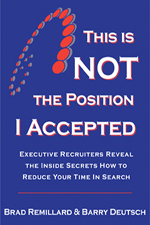
Both of these are marketing documents. That is all a resume is. It is put together to market you. In our best selling job search workbook,“This Is NOT The Position I Accepted” we don’t like to use the word “resume.”  Rather, we prefer to call it your Personal Compelling Marketing Brochure.

Your LinkedIn profile is your online marketing brochure. It must sell you. Your profile can be even more compelling than a resume because of all of the added features LinkedIn allows you to add to your profile. Most are not possible on a resume.

So here is the next set of questions, “How many hours have you dedicated to developing your resume?” My experience is that most candidates spend hours not only developing their resume, but revamping it, changing it, redoing it, updating it, and so on. For many, this is a never ending process.

OK, so then, “How many hours have you dedicated to developing your LinkedIn profile?” We would really like you to be completely honest and answer these questions. Just add your responses to them in the comment box at the bottom.

Still  not convinced about why you need a great and compelling profile on LinkedIn?  Here are some additional reasons that might convince you.

  • For my last three placements, all of the candidates came directly from LinkedIn.
  • Two clients recently told me they hired mid-level sales people directly from LinkedIn.
  • Before posting an open position on a job board, most recruiters go to LinkedIn first.
  • I’m currently working on two searches and I found all of the candidates using LinkedIn.
  • LinkedIn now has over 45 million users.
  • More and more internal recruiters and HR professionals start their searches on LinkedIn.
  • Companies can save thousands of dollars searching LinkedIn versus searching resumes on a job board.

Given all of this, would you reply to a job posting with a fair resume? Would you expect a call back from a hiring authority or recruiter if your resume was “fair?”

If your LinkedIn profile isn’t better than your resume, you are leaving a very valuable tool in your tool box. When I’m coaching job seekers, one of the first items we work on is their LinkedIn profile. It is not uncommon that within two weeks of completing the profile makeover for these candidates, that they start receiving inquiries.

So let us hear from you regarding how you responded to these questions. We are really interested.

Don’t know how to build a great profile?

Get a FREE LinkedIn Profile Assessment. To help you build a great LinkedIn job search strategy, we are having a webinar on March 26. This webinar will ensure you not only have a great profile, but in addition, teach  you how to find contacts, how recruiters use LinkedIn, and how to ensure that if someone comes to your profile that you are positioned as the expert.  CLICK HERE to learn more.

Also, Barry and I have had extensive discussions regarding LinkedIn on our weekly radio show that airs every Monday at 11 AM PST at www.latalkradio.com on channel 2. We add all of these recordings to our audio library. These recordings are free for you to listen to or download. CLICK HERE to review our audio library.

Finally, consider joining our LinkedIn Job Search Networking Group. There are more than 4,4oo members, and a wealth of articles and discussions to help you in your job search. CLICK HERE to join.

Brad Remillard

How to Improve Your LinkedIn Profile: Job Search Tactic #1

How can you improve your LinkedIn Profile for a more effective job search?

Brad and I have talked endlessly about how much easier your job search is to found than to find a job. I recently wrote a post on this exact subject.

We did a radio broadcast on how to improve your LinkedIn Profile. We posted our LinkedIn Self-Assessment Scorecard on our site a few months ago -  a download that has become one our all-time most popular downloads. You can get the download and quickly understand how to improve your LinkedIn Profile for Job Search.

Not only is building an outstanding LinkedIn Profile a job search best practice, but it is also an integral part of personal branding (another key element of an effective job search).

More importantly, every recruiter, HR pro, and hiring manager will google your name and look up on LinkedIn BEFORE they decide to grant you an interview.

Google Profiles will be the focus of our next blog article, Job Search Tactic Number 2.

  • Does your LinkedIn Profile capture a viewer’s attention?
  • What elements of your Profile are they drawn to?
  • Would I as recruiter feel that I just had to call you after viewing your profile?
  • Does your profile scream “you’re not going to find a better person” at me?
  • What are the steps in creating an effective job search LinkedIn Profile?

Below we’ll list the key elements of creating an effective profile. We could probably spend an entire blog post series on each element of your LinkedIn Profile.

Here are the LinkedIn Profile Best Practices (in no particular order)”:

  1. Use a compelling headline
  2. Complete all the details of your entire career
  3. List all your accomplishments in detail with as much quantification as possible
  4. Get a lot of recommendations
  5. Recommend others
  6. Include Slideshare Powerpoint presentations of your accomplishments
  7. List the books you’re ready/comment on other book lists
  8. Incorporate Your Twitter Feed and Link
  9. Include a link to your blog
  10. Include a link to your on-line resume
  11. Pull your blog’s feed onto your profile using Wordpress
  12. Include links for audio/video files of you talking about your accomplishments and achievements.
  13. Join Groups that are professionally/geographically appropriate
  14. Update your status frequently – as in daily
  15. Dramatically build your network with appropriate contacts
  16. Make it easy to connect with you – phone #s and email

These are the elements of your LinkedIn Profile that will differentiate you from your peers. Read a couple of our other blog posts on this subject of leveraging your LinkedIn Profile for Job Search, including an article titled “Become a Beacon in Your Job Search” and “Are You Difficult to Connect With on LinkedIn in Your Job Search?

Barry Deutsch

Don’t forget to join our LinkedIn Job Search Discussion Group to learn more about leveraging your LinkedIn Profile for Job Search.

How to Give Your Resume a Booster Shot

Give your resume a booster shot and improve your ability to get interviews now!

Your resume needs a booster shot.

No longer is a simple 2 page resume enough to capture interest.

It’s boring.

It’s mundane.

It’s ineffective at fully telling your story (especially if you missed the last dozen or so blog posts that Brad and I wrote about putting together a good resume and cover letter – cycle back and read some of the posts first).

Along comes the explosion of social media/social networking and like magic – instant resume booster shot.

So, if social media/social networking is so darn powerful, why are so few executive and managerial job seekers NOT using it effectively?

Let’s zero in on one specific tool – LinkedIn.

LinkedIn could be a panacea for job seekers. First, almost all recruiters, HR people, and hiring managers are doing two things when they see a resume that is a potential match for their open position – they Google your name and they search for you on LinkedIn.

Personally, I go to LinkedIn first.

  • As a Retained Executive Recruiter, I want more information about you.
  • I can’t get enough.
  • I’m insatiable when it comes to learning about who you are even before I pick up the phone and talk to you.
  • I’m trying to leverage my time, and this discovery process is far quicker than wasting time on the telephone.
  • I want the kind of depth of who you are that I cannot glean from your resume and cover letter.

This approach to researching job seekers is becoming more common.

Don’t be the one who misses the train.

You’ve now read about it in almost every business publication, heard from the experts, read about it on blogs such as this one, and your mother last week pointed out the growing importance of building your profile on-line when she saw the segment on the CBS evening news.

Unless your resume literally “blows me away”, I need more information to decide if I want to talk with you about one of my open executive searches. By the way, I might come across one resume every quarter that “blows me away”. Most just fade into the woodwork with their “bland” approach. I want your information to leap off my computer screen, smack me in the forehead, and scream at me that I would be an idiot not to want to learn more about you by immediately pick up the phone to talk with you.

Don’t fall victim to being “vanilla”

Don’t fade into the woodwork.

Some might call me lazy – I prefer to think of myself as highly effective at leveraging myself in time management. This process of quickly discovering whether you’re worthy of a phone call from me as recruiter – by matching your resume with your LinkedIn Profile has probably boosted my productivity by a factor of 2X-3X. I’m now able to spend time on the phone and in-person with the right candidate.

In the next few blog posts, we’ll re-visit how to specifically leverage LinkedIn as a Job Seeker to give your resume a booster shot in the arm. If you’re not effectively using LinkedIn as a resume enhancement tool, shame on you. If you’re not even on LinkedIn and you’re a manager or executive – sorry – but the train has left the station without you!

Here’s a suggestion I would like to toss our to our readers: In preparation for the next blog article in this series titled – “Job Search Marketing 101 – Your LinkedIn Profile Heading”, I would encourage you to complete our one page scorecard for assessing the effectiveness of your LinkedIn Profile for Job Search.

Download our FREE LinkedIn Profile Self-Assessment

Thousands have used this FREE tool to dramatically give their paper resume an on-line booster shot in the arm. Now armed with your self-assessment of your LinkedIn Profile, you’ll be well prepared as we dive deeply into the various components of leveraging LinkedIn to create a powerful online personal brand for yourself, a powerful magnet to attract recruiters and hiring managers, and a beautiful enhancement to your resume that was not possible just a few years ago.

Barry Deutsch

Join the conversation in our LinkedIn Discussion Group as other managers and executives discuss how they’ve leveraged LinkedIn to give their resume a booster shot.

Job Search Networking Using LinkedIn

Using social media in your job search can be the key to your success. Recruiters, HR and hiring managers are using social media sites like LinkedIn more and more every day.  As a job seeker you should be using LinkedIn daily. This program outlines 5 or 6 techniques you can use that don’t take a lot of time but will have tremendous impact on your job search. These few things will make you findable, will set you aside from others, will ensure your network expands, will guide you through the maze of social media traps and most importantly help you move rapidly down the path to your next job.

While listening to the radio program be sure and download our 8 Point LinkedIn  Profile Assessment guide so you can follow along. ow.ly

All our radio show recordings are in our audio library for you to download and listen to anytime. CLICK HERE to review the programs by title.

Social Media Is Good and Bad For Your Job Search

At a recent Vistage meeting of about 20 CEOs  we were discussing using social media as a way to find people. One of the CEOs indicated it is also a great way to eliminate people.

I wasn’t overly surprised to learn that many hadn’t thought about social media for hiring, but I was surprised to learn that many don’t use it as a screening tool. Obviously, after hearing the story from the one CEO, most will reconsider.

Apparently they were in the process of interviewing a candidate for a sales position,  and like most hiring processes it takes a couple of weeks to get through all of the interviews. Over this couple of weeks the company started tracking this person’s Tweets on Twitter and looked up the candidate’s profile picture.

OOPS major faux pas.

Apparently as it was relayed in the meeting, this person’s picture was – let’s just say not professional, and the tweets were completely inappropriate as viewed by the company. The language was foul, the topics discussed rather vulgar, and for a professional sales person raised a lot of red flags.

The company was scared of a sexual harassment lawsuit and how this candidate would communicate with employees and customers. Not to mention what customers would think if they saw this person’s profile picture and followed them on Twitter.

Social media is a double edged sword. I follow Twitter on a regular basis, and I am surprised at how many people looking for a job use inappropriate language, brag about being lazy, tweet about how glad they are about not working, or demonstrate a lack of willingness to be employed. They come across as wanting a job but not willing to work. This is not what a future employer is seeking.

Take care to ensure that you manage  your social media properly and professionally during your job search. Others are watching and listening to you.

If this was helpful to you, it will probably be  helpful to others. Please consider passing it on so they too can benefit. You might add it to your Facebook page, update it on your LinkedIn status, email it to friends or to your network. We all need to help out. One tip can make a huge difference to someone.

Join our LinkedIn Job Search Networking Group and stay connected with the other 3500+ members. CLICK HERE to join.

We offer free recordings of our radio talk show heard every Monday at 11 AM PST on www.latalkradio.com. To listen to past shows on social media, resumes, interviewing, finding the hidden job market and common job search mistakes CLICK HERE to review our library. All are FREE to download.

I welcome your thoughts and comments.

Brad Remillard

How To Leverage Your Network And Get Others To Help You

Most everyone in the market is out doing all the networking they can. Sooner or later they will hear the saying, “Networking is about helping others.” or “Networking is giving before getting.” Both are true and critical to a successful networking process.

But what exactly does this mean? How do you implement this concept?

My experience has been that most are more than willing to help out when asked. Most will make introductions when asked. This is great, but there are other things one can do to give and help others. Even when not asked.

I think one of the best things you can do is share information. My partner Barry and I try to do this daily. We post articles so others can read them and benefit from our 30 plus years of experience. From time to time we will get an email thanking us. In fact, I received one today which was the catalyst for this article.

Here are other ways you can help others.

  • How often do you forward articles  you found helpful to your network?
  • How often to you post the link to your Facebook page allowing all your friends to benefit?
  • Do you post the discussion or forward the article to your Linkedin groups?
  • Do you share it with your Linkedin connections?
  • Do you Tweet and include the link so all of those following you can benefit?
  • Do you make announcements at networking meetings about how you benefited from this article?
  • Have you passed along YouTube videos that you found helpful?

Do you do this? Do you do it on a regular basis out of habit?  Or like many, do you  just read the article and never think about proactively helping others? If you benefited from it so will others.  Just one right tip from you, one article reaching the right person at the right time, may help them land an interview or even a job.

Sharing information is just as important as sharing leads. I could make the argument that it’s more important. Leveraging your network by helping others, makes others want to help you. People generally want to repay those that have helped them.

It is also a tremendous way to keep in touch with people without bugging them. You are helping them and they will appreciate it. So stop worrying about bugging people in your network, instead start helping them by passing on helpful and informative information.

I would like to challenge you to not wait until people seek your help, instead be proactive. Send them information you find helpful so they can benefit. I bet you will start getting emails thanking you for helping.

What a great way to be branded as a ” giver.”

I think this is an excellent way to continue to engage your network and at the same time help others.

Isn’t that what true networking is about?

If this was helpful, then please help others by forwarding on to your network, posting on your Facebook page, Tweet with the link, post to your Linkedin groups or status update.  Let’s all do everything we can to help those looking for employment.

For lots of articles and great discussions to start sharing, join our Linkedin Job Search Networking group. CLICK HERE to join.

Download our free sample cover letter that is proven to get results. If you like it, you can share it with others. CLICK HERE to download.

Build a compelling Linkedin profile to  help  you get noticed by recruiters and hiring managers. Our 8 Point Linkedin Profile Assessment Tool can help you. CLICK HERE to download yours. Then share it with others that don’t have a compelling profile.

Brad Remillard

Why is building a job search network worthless?

Effective Job Search through best practices in job search networking

Building a job search network is usually worthless since that is the end goal for most people. Contrary to popular opinion, size does not matter (at least initially). The most important goal of networking is engagement.

Regardless of whether you build your network on-line or off-line, you still need to provide value to your network. Keith Ferrazzi, Author and Blogger at “Who’s Got Your Back” writes in a recent blog posting about the need to be organized to “ping” your network.

Who do you want to communicate with? How often? What will you provide to your network?

The heart of any effective job search networking is to show your network you are a valuable member of their network. How do you do this? You do it through constant engagement.

Do you conduct drip-nurturing with your most important contacts to stay in front on them and have a “top of mind presence”? How often do you call, send interesting articles, provide links to good information, and focus on their specific needs?

Are you a connector in your network, constantly looking for ways to put people together that is mutually beneficial. Do you get constant requests to be connected with others in your network?

Can you publish information (such as through a blog) that your network might find valuable?

Once you take care of engaging with your job search network, you’ll be stunned at the abundance of job leads, referrals and opportunities that drop through the network into your lap. One of the most frequent complaints I hear from job seekers is “I have a large network, but I don’t get any leads – it doesn’t seem like it’s worth it to build a network”. Remember – the operative word is not building – it’s engaging!

Discover if your effective in your job search networking – both in traditional off-line networking activities and in on-line social media networking – to generate an abundance of job search leads, referrals and offers by downloading our Job Search Planning Scorecard. This FREE tool will help you focus on the most important steps to take in your job search, not just in job search networking, but across every dimension of your job hunt.

Barry

P.S.: Be sure to download some the archived radio show broadcasts on networking that Brad and I have posted to our FREE Job Search Audio Library.

6 Reasons Why LinkedIn Is So Critical In A Job Search

A candidate recently asked me, “How do I find a hiring manager in a large company like Microsoft?” There are a lot of ways to do this but one of the easiest and best is using LinkedIn. When I recommended this to the candidate he completely agreed, however, the problem was he only had about 60 connections. Too few to be effective.

So often I speak with candidates that just don’t understand the value of LinkedIn as a job search tool. We constantly are sent invitations to join someone’s network only to find after months of searching they are just now starting build a LinkedIn network. You should consider building your LinkedIn networking all the time. NOT JUST WHEN IN A JOB SEARCH.

Some benefits to a large LinkedIn database of contacts:

  1. People can find you. The more people at the second and third degrees of separation the more times you will show up in a search. For example, I have around 500 contacts. However, I am linked to over 5 million people on LinkedIn. When I search for a candidate that is a huge database.
  2. LinkedIn will eliminate the need for resume databases on Ladders, Monster, Careerbuilder and other job boards. This is because it costs on average between 5,000 and 10,000 dollars to have access to these resume databases. LinkedIn is free. Why would a recruiter or any company pay that when we can use LinkedIn for free.
  3. Resumes databases by the job boards are not pick up by Google or any search engine. These are the ones you want to make sure you show up on. LinkedIn is and you can even improve your search results for as little as $25 a month. (See prior blog article SEO Your Search On Google)
  4. It helps you find the people you want an introduction to. This is very powerful. I have helped numerous people with introductions as a result of LinkedIn. On a weekly basis I receive requests indicating they found a person in my connections and would I make an introduction. I always agree.
  5. Even when working this is a great tool for resources, customer contacts and introductions, references, service providers and even potential hires for you or your company.
  6. On a personal basis it is a great way to stay in-touch with friends, colleagues, prior employees and networking contacts. When you update your profile they will get a notice and likewise when they update theirs.

Work hard at building your connections. Make every effort to reach that magic 500+. If you use Outlook download the LinkedIn tool bar. It makes inviting people very easy.

There are many more positives to building your LinkedIn network than there are negatives. Many have resisted. I believe this recession has proven to be good thing for everyone’s network.

If you have other ideas share them by adding a comment. Lets help everyone build a strong network.

A good way to start is building a network is making sure your profile is complete. If it isn’t start there and then begin expanding your contacts. Don’t miss the opportunity to get a high ranking on Google.

You can download for free our “8 Matrix LinkedIn Profile Assessment” tool.

Our complete job search home study course the, “Career Success Factor Methodology” is a comprehensive resource that covers all 5 steps in an effective job search. You can review the complete system for just $14.95. We will even pay the shipping and to ensure your success include in a copy of our job search workbook. To review the Career Success Factor Methodology CLICK HERE.

Get Your Profile On Google. SEO Your Search.

Leveraging the social networks is a great search strategy tactic. Facebook and LinkedIn are both vital to one’s ability to be found by recruiters, HR, hiring managers, PE firms, or for that matter anyone looking to find you, or someone with your experiences. However, a big one that is often overlooked by many candidates is Google.

Making yourself findable on Google is an important on-line networking component you should consider. One great way to show up on Google with a high ranking is the use of Adwords. By setting yourself up with Adwords anyone looking for you, your functional area, industry, or even geographical area can find you near the top of the list.

It is easy to do by just following these simple steps. In our complete job search workbook, Rebecca Gonzalez contributed an article that gives a more detailed step-by-step process with graphics to assist you. (You can get the book for only the cost of shipping $5 CLICK HERE).

Step one in getting Google to find you is to have a website (or URL) for Google to find and link to. This is easily done through Linkedin. If you have a LinkedIn profile then you have the URL. Just try and make sure the URL includes your name. To check this go to your profile and look at the public profile link. If it doesn’t include your name just edit it so it does. For example, my LinkedIn public profile URL is http://www.linkedin.com/in/bradremillard. Since my name is rather unique it was easy to use. John Smith or Mary Jones might have a problem.

Step two is setting up a Google Adwords campaign. This will require a small investment, but the nice thing with Google Adwords is that you can control the amount you want to spend each month. It can be as little as $25 a month. Go to adwords.google.com. Login and a follow the wizard. You want your name on the first line. The next couple of lines are limited but this is where you can add something about your functional expertise, industry experience and location. The URL will be your LinkedIn profile. If your profile is complete (and it should be – see below to find out) you are now very findable by anyone and everyone searching for you or your expertise.

Step three set up keywords. You should add your name and include misspellings, maiden name,aliases, nick names, etc. Don’t be shy here. This is how you will be found.

Step four is to set up your account and turn it live. If you don’t have an account it is easy to do. Once you make it live, test it. Type in your name and see if you show up on the right side of the page.

Now when recruiters, HR, or other hiring managers search your name, you will often come up in the search results. You can also see who has searched on your name.

To check whether your profile is the best it can be, download our LinkedIn Profile Assessment Tool. It is free CLICK HERE.

Join our LinkedIn Job Search Networking Group. We post new articles and free downloads daily. CLICK HERE.

If your search is stalled our “Career Success Methodology” job search home study course has everything you need to get your search going. For what most charge just to develop a resume, you can have all the tools you need. To take a look and see what is in the course CLICK HERE. (and you get the book thrown in at no additional charge).

How Recruiters Find People

In my 29 years of recruiting, I have talked with and trained over 200 recruiters around the country in advanced recruiting techniques. Given this, I’ve learned two things 1) the recruiting industry is not homogeneous and 2) we all may be different, but there is one constant; how we find people. There really isn’t anything all that unique about how recruiters go about locating potential candidates. We all use our networks and other people’s networks. This includes both on-line networks such as Linkedin (Click here to join our Linkedin Job Search Group) and off-line such as networking groups in our community.

So why is this important to candidates? Because the most often asked question of recruiters is, “How do I get in touch with retained recruiters?” The answer is a simple one; “You don’t need to.” You don’t really want to get in touch with every recruiter, that is impossible. You only want to get in touch with those recruiters that have a search that meets your background. All the other recruiters don’t matter! So the real question should be; “ How do I get recruiters looking for me, to find me?” Now that is an easy thing to do, but like most things it isn’t simple.

The answer is one word; NETWORKING. Since recruiters maximize the use of their networks and others, all you have to do is be so well networked that a recruiter can’t help but find you. If you really are well networked, as recruiters tap into their networks, your name will always come up as a referral. The more often recruiters hear, “You should call ____, they sound exactly like what you are looking for” the higher the probability you will get a call.

So, if you want to have recruiters calling you, make sure they can find you.

GET YOURSELF NETWORKED in multiple industries and with multiple functions. Don’t forget that Linkedin is used extensively by most recruiters, so it is critical to have your profile up to date and complete. You can download for free our 8 Point Success Matrix For A Linkedin Profile, just click here.